

TL;DR: We paint basements across the Cleveland area: finished rec rooms, drywall and block walls, trim and doors, and the increasingly popular sprayed exposed ceiling in black or bright white. The right products for below-grade spaces, and straight talk when a moisture issue needs solving before paint.
Northeast Ohio basements work hard: playrooms, home gyms, offices, theaters, and half of them still have a workshop corner and the holiday bins. Paint is the fastest way to take a basement from “downstairs” to real living space, and it is also the room where the wrong product on the wrong surface fails fastest. Painting a basement well means knowing what is drywall, what is masonry, what is wood framing overhead, and what each one needs.
Walls: Drywall, Block, and Everything In Between
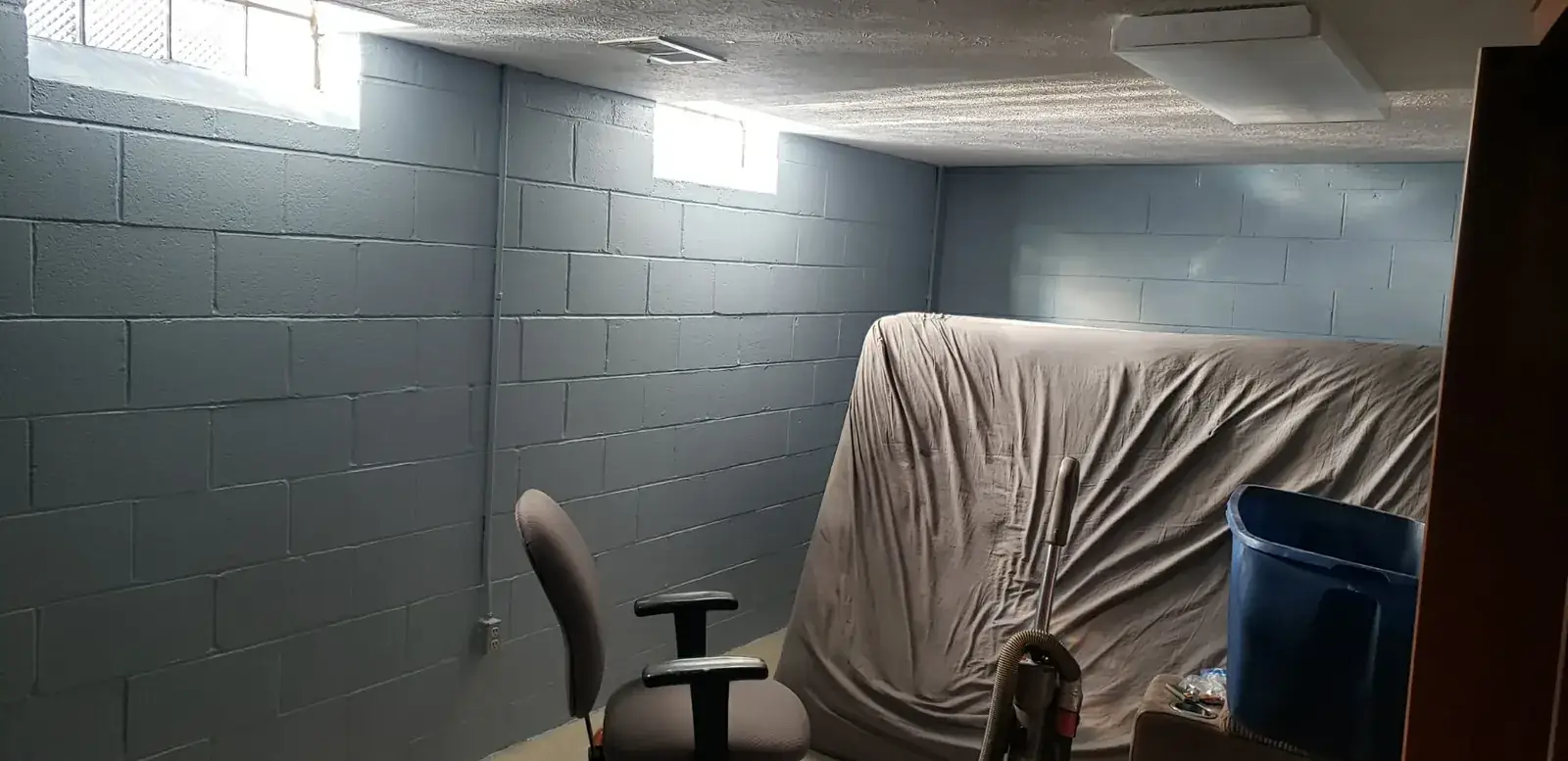
Finished basement drywall paints much like the upstairs, though scuff-resistant, scrubbable finishes earn their keep in a space full of foot traffic, gym equipment, and kids. Bare or previously painted concrete block is a different animal: masonry surfaces typically want breathable masonry-appropriate coatings and, where old paint is flaking or powdery white efflorescence shows up, prep and honest diagnosis before anything else. One thing we will always tell you straight: paint is not waterproofing. If a wall shows signs of active water, seepage, damp patches after storms, that gets addressed first, by the appropriate fix, or the prettiest paint job will not stay pretty. Damaged or patched-together drywall gets sorted by our drywall repair and replacement team before finish coats.
The Sprayed Exposed Ceiling: Black or White?
The signature look in modern basement finishing is skipping the drop ceiling entirely and spraying the exposed joists, ducts, pipes, and wiring one uniform color. It keeps every inch of headroom, keeps mechanicals accessible, and looks intentional in a way bare framing never does. Two directions dominate:
- Black (or deep charcoal): The industrial-loft look. Dark ceilings visually disappear, hide the chaos of ducts and cables best, and make string lights and recessed cans pop. The go-to for theaters, gyms, and bar areas.
- Bright white: Bounces every lumen your basement has, reads clean and airy, and suits playrooms and offices. It shows the mechanicals more, but freshly unified in white they read as architecture rather than clutter.
Either way this is spray territory, high volumes of paint into a thousand odd surfaces, with everything below and around masked off. It is genuinely miserable DIY and genuinely satisfying to hand off. If your ceiling is drywalled instead, our ceiling painting services cover that side of things.
Making a Dark Space Feel Bright
Most basements fight low natural light, and color choice does more than any single lamp. Warm whites and soft greiges keep things cozy without going dim; cool bright whites maximize what light exists; and deep moody colors, done deliberately with good lighting, can make a basement den feel like a destination instead of an apology. We talk through how your specific light, ceiling height, and flooring play with each candidate color at the walkthrough, with samples on your actual walls rather than a screen.
The Details That Finish the Job
- Trim, baseboards, window wells, and the basement door everyone touches with full hands.
- Stair walls and railings down into the space, usually the first thing guests actually see.
- Built-ins, shelving, and support columns, painted to blend away or stand out.
- Utility and laundry zones in tough, wipeable finishes.
What Basement Painting Costs
Basements vary more than any room upstairs, which makes ranges wide: wall painting tends to track normal interior per-square-foot rates, while sprayed exposed ceilings are typically quoted by area and complexity, since masking and material volume drive the work. Condition matters too; chalky block and patchy drywall add prep. We keep it simple: a walkthrough, a straight number, and no surprises. For broader context, see our Cleveland painting price guide.
Basement Painting FAQs
Can you paint concrete block basement walls?
Typically yes, with masonry-appropriate primers and coatings, provided the wall is sound and dry. Flaking old paint, powder, or dampness changes the plan, and we will tell you which situation you have before quoting.
Black or white for an exposed basement ceiling?
Black hides mechanicals and feels intentional and moody; white maximizes brightness in a low-light space. Ceiling height, lighting plan, and how you use the room decide it, and we are happy to make a recommendation on site.
Should anything happen before painting a basement?
Any active moisture issue gets resolved first, and a dehumidifier is a basement’s best friend generally. Beyond that, normal prep, cleaning, patching, priming where needed, is part of the job itself.
How disruptive is the project?
Wall-and-trim projects are usually a day or two of activity confined downstairs. Sprayed ceilings add masking time and ventilation, and we will map the schedule out with you so laundry day survives.
Ready to make the basement a favorite floor? Contact us for a walkthrough, or see the full range of work our interior painters take on across the house.
Views Expressed Disclaimer
The views, opinions, and information presented in this article are for informational purposes only and do not necessarily reflect the official policies or positions of Chagrin Falls Painting Company. While every effort has been made to ensure accuracy, Chagrin Falls Painting Company is not liable for any errors, omissions, or decisions made based on the content provided. Readers are encouraged to consult professionals for specific advice or assistance related to their unique circumstances.