As an Amazon Associate, I earn from qualifying purchases. Privacy Policy / Terms
Exterior paint does more than improve your home’s appearance – it’s your first line of defense against Northeast Ohio’s demanding weather. Lake-effect moisture, freeze-thaw cycles, UV exposure, and seasonal temperature swings constantly test exterior coatings. With over 35 years providing exterior home painting services across the region, we’ve learned exactly what signs indicate it’s time to repaint – often before homeowners notice the damage themselves. They are as follows:
1. Peeling or Flaking Paint
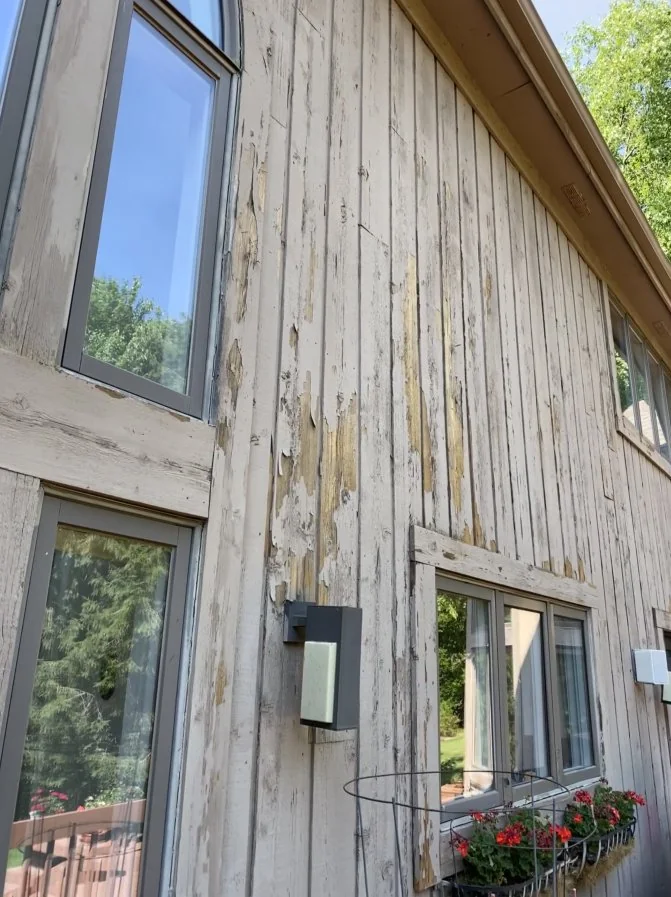
Peeling is one of the clearest indicators that a coating system has failed.
On many Northeast Ohio homes, this appears first on south- and west-facing elevations where UV exposure is strongest. On older wood homes, peeling often follows years of layered repainting without full surface stabilization. On aluminum siding, it may show as broad sheets lifting after chalking has weakened adhesion.
Once paint loses adhesion, moisture intrusion becomes a concern — especially during freeze-thaw cycles.
2. Chalking or Powdery Residue
If you run your hand across the siding and it leaves a powdery residue, the paint film is breaking down.
This is common on older aluminum-clad homes throughout Cleveland suburbs. Chalking indicates oxidation and surface degradation. While light chalking can sometimes be addressed with proper washing and preparation, heavy chalking usually signals the coating is nearing the end of its service life.
3. Failing Caulk Lines Around Trim and Joints
Exterior caulk plays a critical role in moisture control.
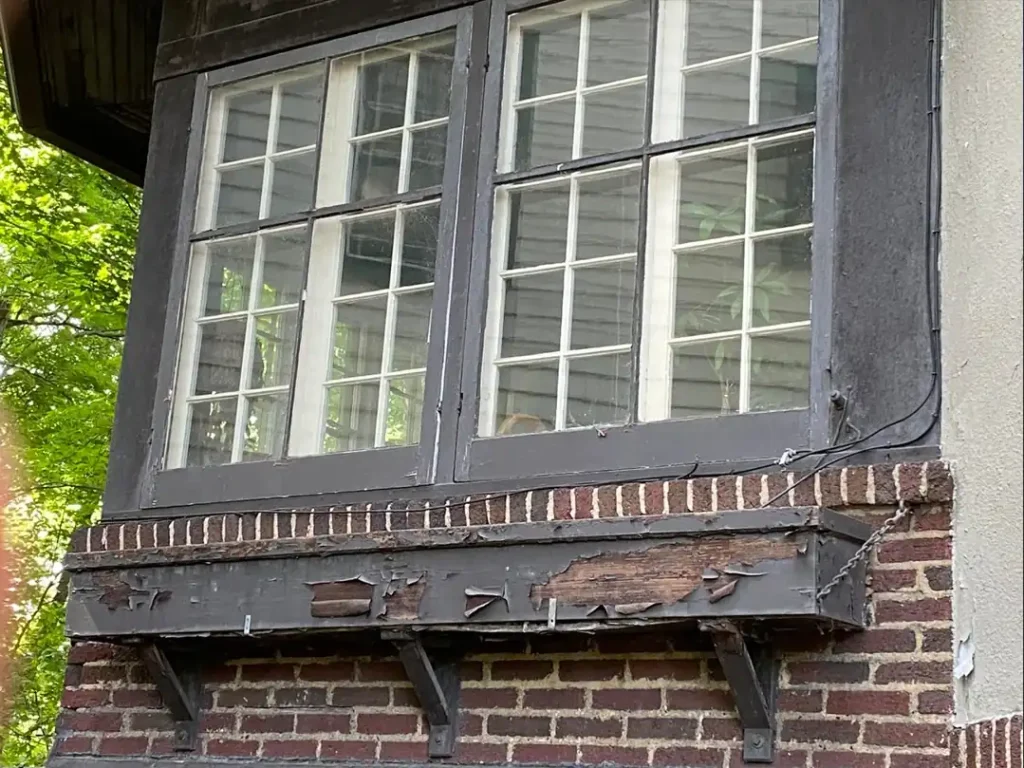
In Northeast Ohio’s climate, repeated expansion and contraction from seasonal temperature swings can cause caulk to split or pull away from joints. We often see this around window trim, corner boards, and siding transitions.
Open joints allow moisture intrusion behind siding and trim, which can lead to more significant repairs if left unaddressed.
4. Faded or Uneven Color
Fading is gradual, and many homeowners do not notice it until comparing shaded areas to sun-exposed sections.
UV exposure, particularly on southern elevations, slowly breaks down pigments. Darker colors tend to show fading more quickly. While fading alone may not indicate immediate failure, it often precedes more visible deterioration.
5. Cracked or Checking Wood Surfaces
On older homes with wood siding or trim, surface checking is common.
When protective coatings thin out, wood absorbs moisture during humid conditions and then contracts during dry or freezing weather. Over time, this movement causes small cracks and surface splits.
Proper preparation at this stage can stabilize surfaces before deeper deterioration occurs.
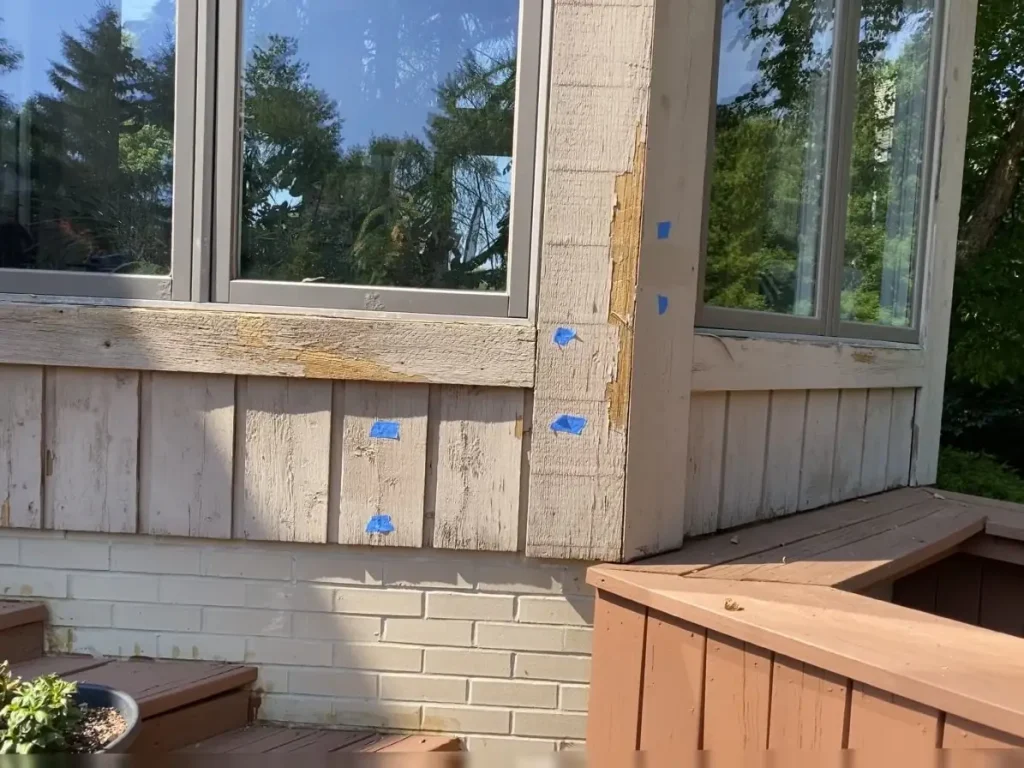
6. Soft Spots or Minor Wood Deterioration
Paint’s job is to protect the substrate. When it fails, underlying materials become vulnerable.
We frequently see early-stage deterioration around window sills, fascia boards, and lower trim areas where water exposure is concentrated. Addressing these areas during repainting prevents larger carpentry projects later.
7. It’s Been A Decade Or More Since the Last Exterior Project
Even without dramatic failure, age matters.
In Northeast Ohio, exterior paint lifespan varies widely depending on material, color choice, sun exposure, and preparation quality. Aluminum and fiber cement may hold longer than exposed wood surfaces. Darker colors and high-sun elevations tend to require attention sooner.
If it has been a decade or more since your last project, a professional evaluation can help determine whether repainting is preventative or overdue.
What We’ve Learned From 35+ Years
Every home tells a story through its exterior condition. We’ve painted century homes with six layers of historical coatings, newer builds facing direct lake exposure, and everything in between. The homes that hold up best share one thing: they were prepped correctly and repainted before minor issues became major problems.
The typical timeline for exterior repainting in our region is 8-12 years for wood surfaces, 12-15 years for aluminum, and 15-20+ years for fiber cement – but sun exposure, color choice, and original prep quality all influence these numbers significantly. These timelines also factor into exterior home painting costs, as catching problems early often means less prep work and lower overall investment.
What a Professional Exterior Evaluation Typically Includes
A thorough exterior assessment evaluates adhesion and overall surface stability, the condition of caulk lines and joints, and the integrity of wood surfaces and moisture-prone areas. It also considers accessibility challenges, architectural detail that may affect preparation and application, and the home’s previous paint history. Every property is reviewed based on its actual site conditions rather than assumptions about age or appearance alone.
Schedule Your Free Exterior Evaluation
If you’re seeing any of these signs on your home, we’ll provide an honest assessment of your exterior’s condition and timing recommendations. We’ve been evaluating and painting homes across Northeast Ohio for over 35 years – we know what’s urgent, what can wait, and what prep work will actually make your paint job last.
*The information in this article is for educational purposes based on our experience painting homes in Northeast Ohio. Actual results and timelines vary based on numerous factors including surface condition, maintenance, exposure, and site-specific conditions. For specific guidance on your home, schedule a professional evaluation.
Views Expressed Disclaimer
The views, opinions, and information presented in this article are for informational purposes only and do not necessarily reflect the official policies or positions of Chagrin Falls Painting. While every effort has been made to ensure accuracy, Chagrin Falls Painting is not liable for any errors, omissions, or decisions made based on the content provided. Readers are encouraged to consult professionals for specific advice or assistance related to their unique circumstances.