

Before Paint Was Paint: The Deep Origins of Color
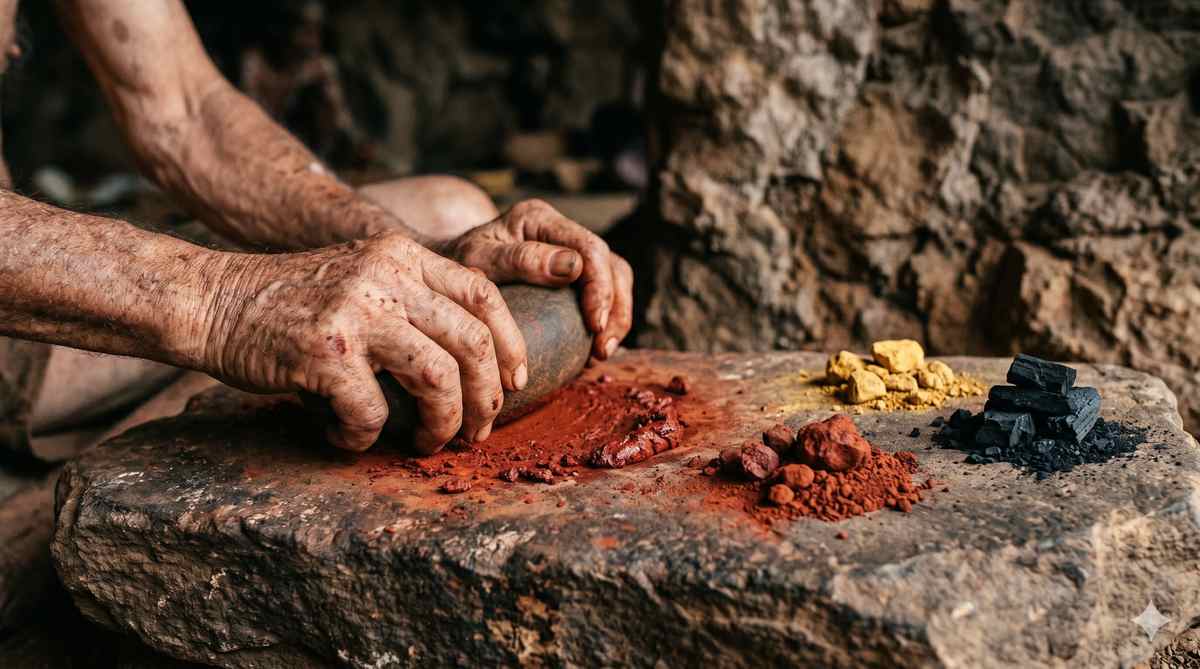
The first paints were not invented in a workshop. They were discovered in the dirt. Tens of thousands of years before recorded history, people noticed that certain soils, clays, and minerals left lasting marks. Iron-rich earth gave reds, yellows, and browns. Charred wood and bone gave black. Ground chalk and certain clays gave white. These pigments were already lying around, waiting to be used, and the discovery that they could be fixed to a surface marks the true beginning of paint. What turns a colored powder into paint is the binder, the substance that holds pigment particles together and glues them to a surface. The earliest binders were whatever was at hand: animal fat, plant saps, blood, egg, and even saliva. A pigment without a binder is just dust that blows away. A pigment locked into a binder becomes a coating that can survive for an astonishing length of time. That basic two-part formula, pigment plus binder, still describes every can of paint sold today. Everything else in the history of paint is refinement of those two ingredients.The Oldest Surviving Paint
Some of the oldest evidence of pigment processing dates back well over one hundred thousand years. Archaeologists have found grinding tools, shells used as mixing containers, and prepared ochre that had clearly been heated to shift its color, an early form of pigment chemistry. The people doing this were not decorating houses. They were marking bodies, objects, and eventually cave walls, but the technical act of selecting a pigment, processing it, and binding it is unmistakably the ancestor of modern paint. The famous painted caves of Europe, created many thousands of years ago, show how far this early craft developed. The artists used several pigments at once, blended tones, applied paint by brush, by finger, and by blowing it through hollow bones to create a spray effect. They understood that different binders produced different results. In short, the fundamentals of painting technique were already being worked out before the first permanent settlement was ever built.
Ancient Civilizations and the Birth of the Paint Industry
As humans settled into cities, paint moved from ritual into daily life, decoration, status, and architecture. Each major ancient civilization pushed the craft forward, and together they assembled most of the techniques that would dominate for thousands of years.Egypt: The First Color Laboratory
Ancient Egypt is where paint first became something like an industry. The Egyptians were extraordinary colorists, and they were not content with the colors nature handed them. They engineered new ones. Their greatest achievement was Egyptian blue, widely considered the first synthetic pigment in human history. It was made by heating sand, copper, and a calcium compound together at high temperature, a genuine feat of chemistry produced thousands of years before anyone used that word.
China: Lacquer and Lasting Finishes
On the other side of the world, Chinese artisans developed one of the most durable coatings the ancient world ever produced: lacquer, made from the refined sap of the lacquer tree. Applied in many thin layers and cured carefully, it formed a hard, glossy, water-resistant shell that could survive for thousands of years. Lacquered objects buried in ancient tombs have emerged with their finish largely intact. This was a profound lesson that would echo through the whole history of paint: a coating is not just color, it is protection. That same principle is exactly what drives modern exterior painting, and it was already fully understood thousands of years ago.Greece and Rome: Color as Architecture
We tend to picture ancient Greek and Roman buildings and statues as gleaming white marble. In reality, they were vividly painted. Temples, sculptures, and public buildings were covered in bright pigments, and the bare white look we associate with classical antiquity is an accident of time, the original paint simply weathered away over the centuries. This is one of history’s great reminders that paint is impermanent unless it is maintained, a truth every homeowner eventually learns. The Romans in particular industrialized pigment production and trade. They mined and manufactured pigments at scale, shipped them across the empire, and developed wall-painting techniques, including fresco, where pigment is applied onto fresh wet plaster so the color becomes part of the wall as it dries. Roman wall paintings preserved at sites buried by volcanic ash show just how sophisticated their interior decoration had become, with rich reds, deep blacks, and elaborate scenes covering the walls of ordinary homes.The Tools of the Trade: A Parallel History
Paint never traveled alone. Alongside the story of pigments and binders runs a quieter history of the tools used to apply them, and that history matters just as much to the final result. The earliest applicators were the most basic imaginable: fingers, pads of moss, frayed twigs, and chewed sticks. Cave painters used hollow bones to blow pigment in a fine mist, an early airbrush thousands of years ahead of its time. The brush as we know it, bristles bound to a handle, is an ancient invention refined over many centuries. Early brushes used animal hair, and the choice of hair mattered enormously. Soft hair held more paint and left fewer marks, ideal for fine work and smooth finishes. Stiffer bristle pushed thicker paint into rough surfaces and held up to hard use. Painters learned to keep a range of brushes for different tasks, knowledge that survives in the professional trade today, where the right brush for trim is not the right brush for a rough exterior wall. The roller, by contrast, is a modern invention, developed in the twentieth century to speed the coating of large flat areas like walls and ceilings. It dramatically reduced the time needed to paint a room and changed the economics of house painting. Spray application followed, allowing fast, even coverage of large or intricate surfaces. Each new tool did not replace the brush so much as join it, expanding the painter’s options. A skilled professional still chooses among brush, roller, and sprayer based on the surface, the paint, and the finish required. The options have grown but the judgment has stayed the same.The Medieval and Renaissance Transformation
For a long stretch after the classical world, paint remained largely a craft of artisans, monks, and trade guilds. Pigments were precious, recipes were guarded, and the people who made paint were often the same people who applied it. Then came two developments that changed everything: the rise of guild knowledge and the perfection of oil paint.The Guild System and Secret Recipes
In medieval Europe, painters and the makers of pigments organized into guilds that controlled who could practice the trade and how knowledge was passed on. Paint recipes were valuable property. A distinctive shade, a tougher finish, a richer gloss: these were competitive advantages, and they were protected like trade secrets. This period cemented an idea that still matters in professional painting today: skill is not just about applying color. It is about knowing materials deeply, how they behave and age, and how to prepare a surface so the finish lasts.The Oil Paint Revolution
The single most important development of this era was the refinement of oil-based paint. Painters discovered that grinding pigment into drying oils, especially linseed oil pressed from flax seeds, produced a paint with remarkable qualities. It could be blended smoothly, applied in thin translucent layers or thick opaque ones, and it dried slowly enough to allow careful, detailed work. Once dry, it formed a tough, flexible, long-lasting film.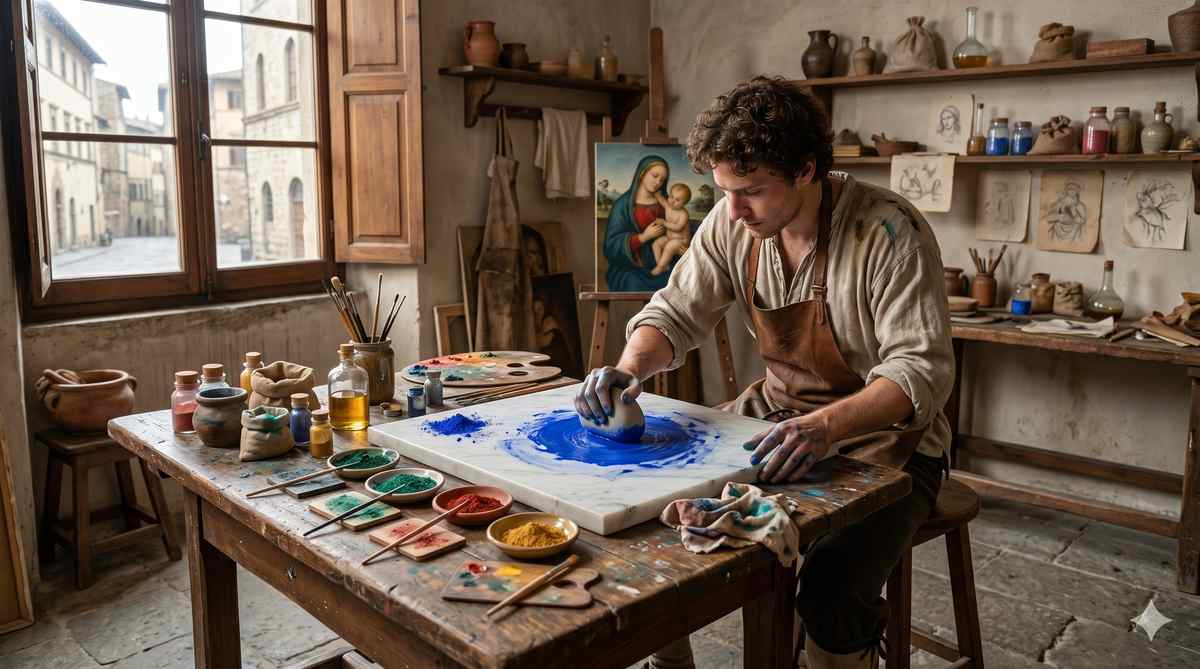
Paint Before the Factory: How Paint Used to Be Made by Hand
It is worth pausing on a fact that is easy to forget: for almost all of history, there was no such thing as buying a can of ready-made paint. If you wanted to paint something, you, or a tradesperson you hired, made the paint on site, often the same day you used it. The process was laborious. Pigments arrived as raw lumps or powders and had to be ground extremely fine by hand, usually on a stone slab with a hand-held grinding stone called a muller. The finer the grind, the smoother and stronger the paint. This grinding could take hours. The ground pigment was then mixed with a binder, linseed oil for oil paint, or other mediums for other paint types, and thinned to a workable consistency. The painter had to judge the proportions by eye and experience, because a batch that was too thin would not cover and a batch that was too thick would not flow.Milk Paint and Other Folk Recipes
Not everyone had access to expensive pigments and oils. For everyday painting of homes, furniture, and barns, people used humble, locally sourced recipes. The most enduring of these is milk paint, made from milk protein (casein), lime, and earth pigments. It was cheap, easy to mix from farm ingredients, and produced a soft, matte finish that has come back into fashion among people who love its authentic look. Many surviving pieces of early furniture and many old farm buildings owe their color to milk paint. Another common approach was distemper, also called whitewash in its simplest form: chalk or lime mixed with water and a binder like glue. Whitewash was the workhorse coating for centuries, used on everything from cottage walls to fences. It was inexpensive, easy to apply, and could be refreshed with a new coat whenever it wore down. These folk paints remind us that for most of history, painting a home was a practical, recurring chore, much as exterior maintenance is for homeowners today.The Industrial Revolution: Paint Becomes a Product
Everything about paint changed in the 1800s. The Industrial Revolution turned paint from something made by hand, batch by batch, into a manufactured product sold ready to use. This shift is the hinge on which the entire modern paint world turns.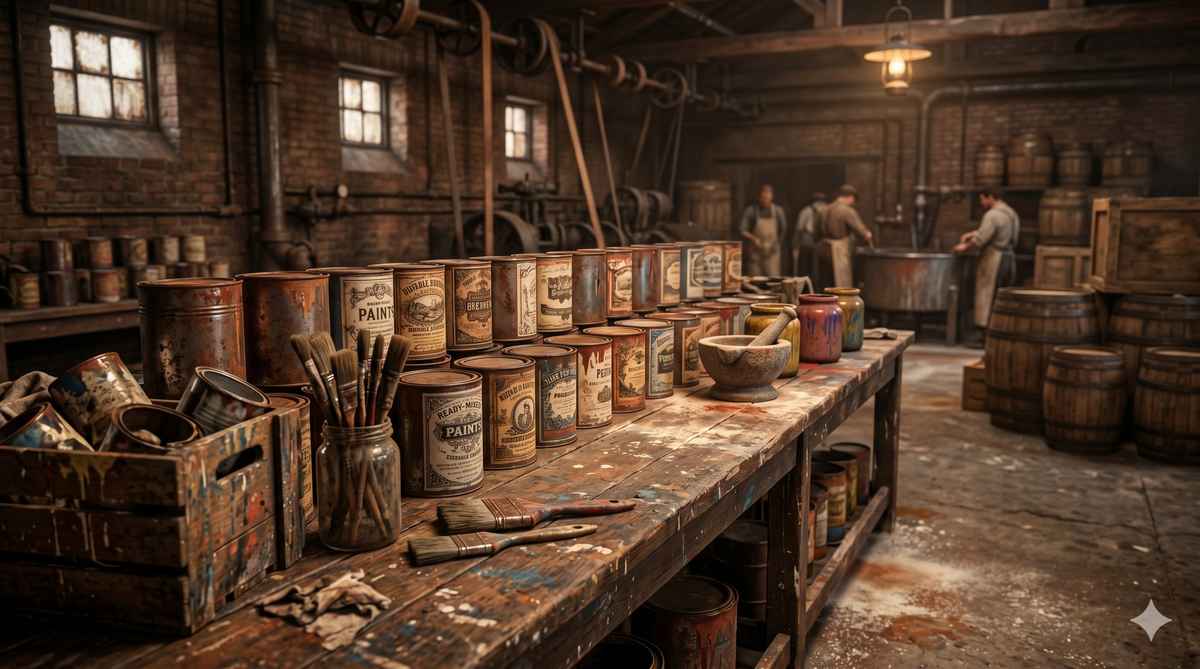
The Ready-Mixed Paint Breakthrough
Two things had to happen for ready-made paint to exist. First, machines had to be able to grind pigment finely and consistently at scale, replacing the slow hand-grinding of earlier centuries. Industrial mills could do in moments what once took a craftsperson hours. Second, paint had to be sealed in a container that kept it usable. The development of the airtight metal paint can, with a lid that could be pried off and pressed back on, meant paint could be mixed in a factory, shipped, stored, and sold to anyone. By the later part of the nineteenth century, ready-mixed paint in cans had become a commercial reality, and it democratized painting. A homeowner no longer needed to hire a specialist just to produce usable paint. The trade-off was that the deep craft knowledge of how to make and adjust paint by hand began to fade, replaced by the convenience of a standardized product. Professional painters increasingly became experts in preparation and application rather than manufacture, which is exactly the division that defines the trade today.The Boom in Synthetic Pigments
The nineteenth century also produced an explosion of new colors. Advances in chemistry created a wave of bright synthetic pigments that were cheaper and more vivid than the natural earths and rare minerals of the past. Colors that had once been expensive luxuries became affordable. The downside was that some of these early synthetic colors were dangerously toxic, built around heavy metals like lead, arsenic, and mercury. The pursuit of brilliant, cheap color came at a real cost to health, a problem that would take more than a century to fully address.The Rise of the Paint Brand
Once paint could be manufactured and sold in cans, it became a branded consumer product, and the way people chose paint changed completely. In the era of hand-mixed paint, color came from whatever pigments a painter could source and blend. With factory production, companies could offer consistent, named colors that looked the same in every can, year after year. This consistency was a genuine innovation. A homeowner could repaint a single wall and trust it would match, or order more of a color months later and get exactly the same shade. This led directly to the color sample and the fan deck, the rows of small painted chips that let a customer compare hundreds of shades before committing. The idea of choosing paint from a curated palette of named colors, rather than mixing a one-off batch, is barely more than a century old, yet it now feels completely natural. It also shifted the homeowner’s role from simply approving a tradesperson’s work to actively selecting from a vast range of options, which is why color consultation has become part of the modern painting conversation. Behind every tidy fan deck lies the whole long history of pigment discovery, the chips a homeowner flips through are the distant descendants of ground ochre and Egyptian blue.The Lead Problem: A Hard Lesson in Paint History
No honest history of paint can skip lead. For thousands of years, lead-based white pigment was prized because it was opaque, durable, and gave paint a tough, washable finish. Lead white was a cornerstone of both fine art and house paint, and lead compounds were used in many colored paints as well. It worked extremely well as a coating, which is precisely why it was so hard to give up. The problem is that lead is poisonous, and lead-based paint becomes especially hazardous as it ages, chalks, chips, and turns to dust. The dangers were recognized gradually over the course of the twentieth century, and eventually lead-based paint for homes was banned in many countries. This is why older houses are treated with such caution during renovation and repainting: paint applied generations ago can still be present under newer coats. Today, dealing safely with old painted surfaces in historic homes is a core part of professional interior painting and exterior work alike, and it is one of the clearest reasons that proper surface preparation is not optional. The history of lead paint is a sobering reminder that a coating’s performance is only part of the story, safety matters just as much.The Twentieth Century: The Chemistry Revolution
If the 1800s industrialized paint, the 1900s reinvented it from the molecules up. The rise of modern chemistry, especially the science of polymers and plastics, gave paint makers entirely new materials to work with. The result was a series of advances that produced the paints we recognize today.The Arrival of Water-Based Paint
For most of history, the best protective paints were oil-based, and oil paint had real drawbacks. It was slow to dry, it had a strong smell, it required solvents like turpentine for cleanup, and over time it tended to yellow and grow brittle. The transformational breakthrough of the mid-twentieth century was practical water-based paint, often called latex or acrylic paint even though it contains no rubber latex in the traditional sense. Water-based paints suspend tiny particles of synthetic resin in water. As the water evaporates, the resin particles fuse together into a continuous, flexible film. The advantages were enormous: faster drying, far less odor, easy cleanup with soap and water, and a finish that stayed flexible and resisted cracking as a house expanded and contracted with the seasons. For a climate with hard freeze-thaw cycles, that flexibility is not a minor perk, it is the difference between a finish that lasts and one that splits apart. Water-based technology steadily improved until it could match and then exceed oil-based paint for most uses, and it became the standard for the majority of residential painting.Specialized Coatings for Every Surface
Modern chemistry also allowed paint to become specialized. Rather than one general-purpose product, the twentieth century produced coatings tailored to specific jobs: primers engineered to bond to difficult surfaces and seal them, high-durability enamels for trim and doors that take constant handling, moisture-resistant formulations for bathrooms and kitchens, and exterior paints built to withstand sun, rain, and temperature swings. Stains were refined as well, designed to soak into wood and protect it while showing the grain, which is the foundation of modern deck staining and wood restoration. This specialization is one of the most important and least appreciated developments in paint history. It means that doing a job well now requires knowing which of many products is right for a given surface, environment, and use. A coating that performs beautifully on interior drywall may fail quickly outdoors, and a finish ideal for a deck would be wrong for a kitchen cabinet. Matching product to purpose is a large part of what separates a lasting professional result from a quick job that fails early. The expertise behind quality cabinet refinishing, for instance, lies as much in choosing and preparing for the right durable finish as in the painting itself.How Modern Paint Is Engineered
Today’s paint is a precisely engineered product, but at its heart it still rests on the same logic the ancients discovered. A modern can of paint contains four basic categories of ingredient, and understanding them demystifies the whole product.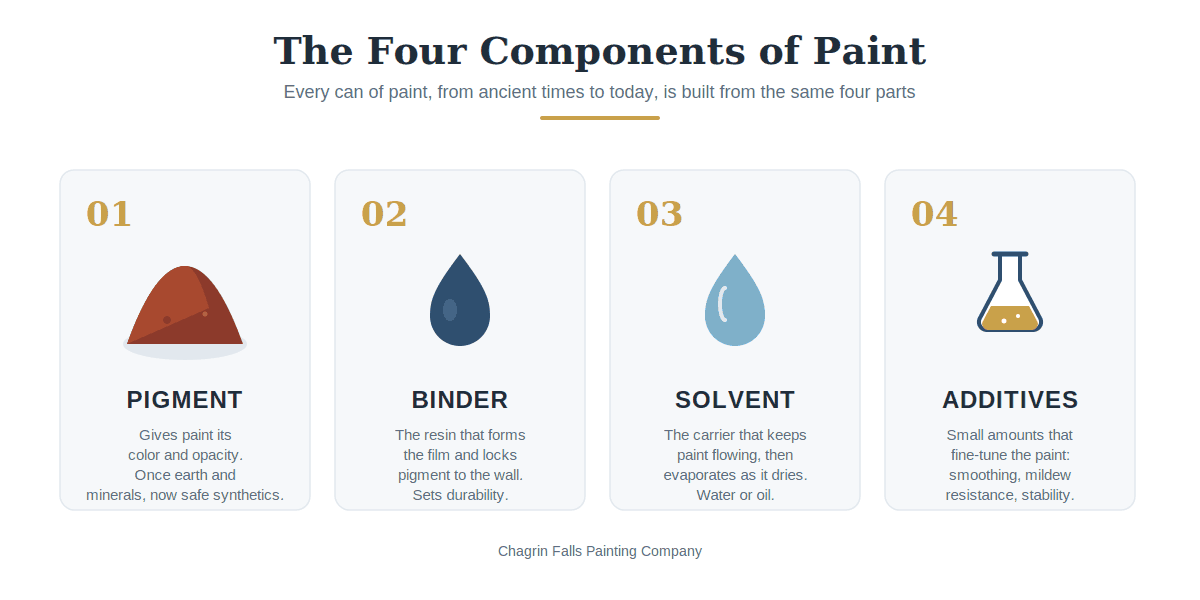
Why Preparation Still Matters More Than the Paint
Here is the great irony of all this technical progress: even the most advanced paint ever made will fail if it is applied to a poorly prepared surface. This is the one constant that runs unbroken from the painted caves to the present day. The cave artists chose their surfaces carefully. The Egyptians prepared smooth grounds. Renaissance masters built up careful layers. And modern paint, for all its engineered brilliance, still relies on clean, sound, properly primed surfaces to do its job. Paint does not fix a bad surface, it reveals it. Peeling, cracking, and early failure are almost always preparation problems, not paint problems. Cleaning, scraping, sanding, repairing, and priming are the unglamorous steps that determine whether a finish lasts two years or fifteen. This is the deepest lesson of paint’s long history, and it is why professional house painting places so much emphasis on the work that happens before the first finish coat ever goes on.Paint and Climate: Why Where You Live Matters
One thread that runs quietly through this entire history is environment. The lacquer of China, the frescoes of Rome, the milk paint of farm country, each was shaped by local materials and local conditions. The same is true today, and it is something every homeowner eventually confronts. A paint’s performance depends enormously on the climate it must endure. In regions with harsh seasonal swings, where surfaces bake in summer heat, freeze in winter, and cycle through moisture again and again, coatings are under constant stress. Wood expands and contracts. Water finds its way into tiny gaps and then freezes and expands. Sunlight slowly breaks down the binder. A finish that might last for decades in a mild, dry climate can fail far faster where the weather is severe. This is why modern flexible, water-based exterior coatings were such a leap forward, and why timing, surface preparation, and product choice matter so much in demanding climates. The long history of paint is, in part, the history of fighting the weather, and that fight is never finally won, only managed through good materials and good maintenance.House Painting in Early America
The history of paint on this continent has its own distinct character, shaped by frontier conditions and limited supplies. Early American settlers often had little access to manufactured pigments and made do with what the land provided. Homes were frequently left unpainted, weathering to gray, simply because paint was a luxury that working households could not justify. When color did appear, it often came from local recipes built around milk, lime, and earth pigments dug nearby.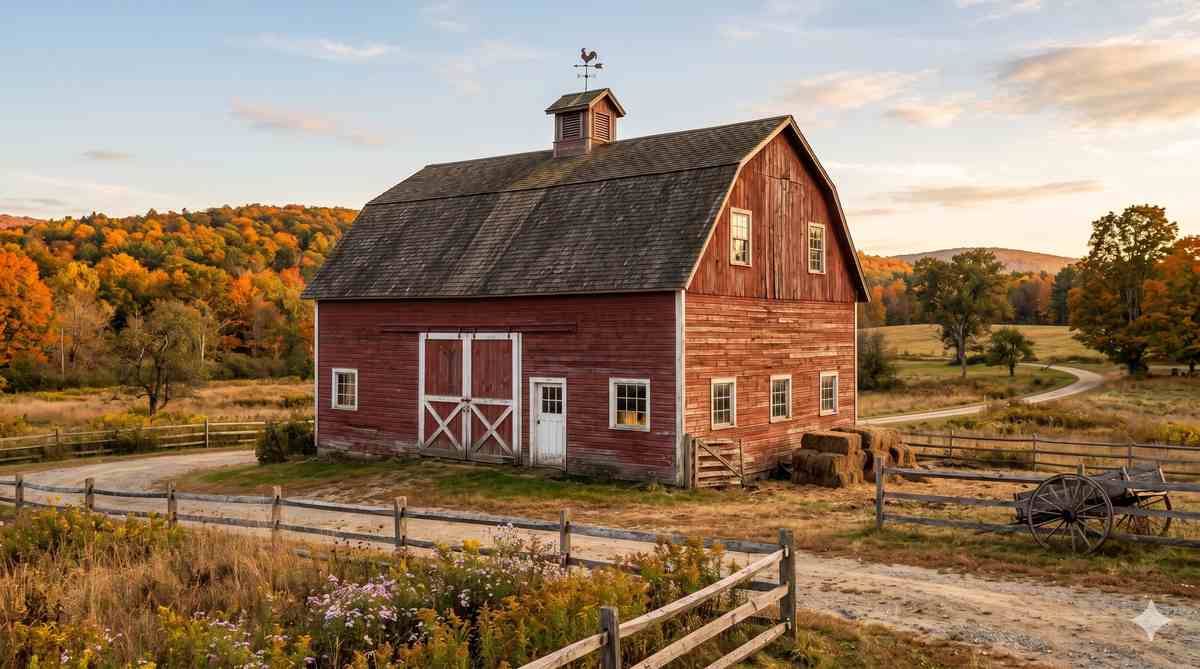
Color, Status, and Meaning Through the Ages
Paint has never been only about protection. From the very beginning, the colors people chose carried meaning, and the story of which colors were available, affordable, and fashionable is woven through human history in surprising ways. For most of the past, your access to color was a direct reflection of your wealth and status, because certain pigments were extraordinarily rare and expensive. The most famous example is the deep blue made from a semi-precious stone that had to be mined far away and ground laboriously into pigment. For centuries it cost more than its weight in gold and was reserved for the most important subjects in the most important works. Rich reds, certain purples, and brilliant greens were similarly precious at various points in history. The result was a world in which a building’s or a garment’s color quietly announced the resources behind it. Bright, saturated color was a luxury, and muted earth tones were the everyday reality for most people. The synthetic pigment revolution of the industrial age shattered this hierarchy. Once vivid colors could be manufactured cheaply, color became democratic. Ordinary homes could be painted in shades that had once been reserved for palaces and cathedrals. The freedom modern homeowners take for granted, walking into a store and choosing from thousands of affordable colors, is historically extraordinary. It represents the end of a very long period in which color was rationed by cost. Understanding that history adds a small richness to an everyday decision: choosing a wall color is the inheritor of a story tens of thousands of years long.The Modern Paint Industry: The Companies Behind the Can
For most of history, paint was made by countless small local producers. Today the global paint and coatings industry is a mature, consolidated business worth well over one hundred and eighty billion dollars a year, dominated by a handful of very large companies whose names are on the cans in nearly every hardware store and paint aisle. Understanding who they are completes the journey from cave pigment to the modern shelf. The largest paint and coatings company in the world by revenue is Sherwin-Williams, and this is where the story comes home for Northeast Ohio. Sherwin-Williams was founded in Cleveland in 1866 by Henry Sherwin and Edward Williams, and it has called the region home ever since. The company holds a central place in paint history: it introduced one of the first commercially successful ready-mixed paints in the 1870s and patented an early resealable paint can, two of the very innovations that turned paint from a hand-mixed craft into a product anyone could buy. In 1941 it developed a fast-drying, water-thinnable interior paint alongside the paint roller, helping launch the modern era of do-it-yourself painting. Today Sherwin-Williams operates thousands of stores, owns well-known brands including Valspar, Minwax, Purdy, Thompson’s WaterSeal, Dutch Boy, and Krylon, and generates well over twenty billion dollars in annual revenue. In 2026 the company marked its 160th anniversary by opening a new 36-story global headquarters in downtown Cleveland, reaffirming roots that stretch back more than a century and a half. For homeowners in the Cleveland area, this is a point of genuine local pride: the surfaces of countless Northeast Ohio homes are coated with paint from a company born and still based just down the road. It is a reminder that the long global history of paint runs directly through this region.The Other Industry Giants
Sherwin-Williams shares the top of the industry with a small group of other multinationals. PPG Industries, another American company, is one of the largest coatings makers in the world, with a heavy presence in automotive, aerospace, and industrial finishes alongside architectural paint. AkzoNobel, a Dutch company whose corporate roots reach back centuries, is Europe’s largest paint maker and owns globally recognized decorative brands such as Dulux and Sikkens. Nippon Paint of Japan and Asian Paints of India are dominant across the fast-growing Asia-Pacific market, which is now the single largest region for paint demand in the world. Other major players include BASF, Axalta, and RPM International, the last of which is itself an Ohio company, headquartered in the Cleveland area. The industry has been reshaped in recent years by waves of consolidation, with large companies acquiring smaller ones and even the giants pursuing mergers with one another. The result is the mature, tightly held market we see today, where a few corporations supply an enormous share of the world’s paint while thousands of smaller regional manufacturers continue to serve local and specialty needs. It is a long way from the guild painter grinding his own pigment, yet the underlying product is still recognizably the same thing: pigment, bound in a film, applied to protect and beautify a surface.The Story Continues: Paint Today and Tomorrow

Frequently Asked Questions About the History of Paint
When was paint first invented?
There is no single invention date, because paint emerged gradually from the use of natural pigments. Evidence of humans processing and using colored pigments dates back well over one hundred thousand years, making paint one of the oldest technologies our species ever developed, far older than writing, agriculture, or the wheel.Who invented paint?
No individual invented paint. It was discovered and developed independently by many early human groups who learned that certain earths and minerals could be ground into color and bound to a surface. Later civilizations like Egypt, China, Greece, and Rome each refined the craft, and the modern manufactured product was shaped by chemists and industrialists over the last two centuries.What was the first synthetic paint color?
Egyptian blue is widely regarded as the first synthetic pigment, created by the ancient Egyptians by heating a mixture of sand, copper, and a calcium compound. It predates most other manufactured colors by thousands of years and stands as one of the earliest examples of deliberate chemistry.How was paint made before factories existed?
For most of history, paint was made by hand on site. Pigments were ground extremely fine by hand on a stone slab, then mixed with a binder such as linseed oil, milk protein, or lime, and thinned to a workable consistency. There was no ready-made paint to buy until industrial manufacturing and the airtight paint can arrived in the nineteenth century.Why is old lead paint dangerous?
Lead-based paint was valued for its durability and coverage, but lead is toxic, and the hazard grows as old paint ages, chips, and turns to dust. Because of this, lead house paint was eventually banned in many countries. Older homes may still have lead paint under newer coats, which is why safe preparation by knowledgeable professionals is so important when repainting older properties.What is the difference between oil-based and water-based paint?
Oil-based paint suspends pigment in a drying oil and was the professional standard for centuries; it is durable but slow-drying, strong-smelling, and prone to yellowing over time. Water-based paint suspends synthetic resin particles in water that fuse into a flexible film as the water evaporates; it dries faster, has far less odor, cleans up with water, and stays flexible, which makes it well suited to surfaces that expand and contract with the seasons.What is the largest paint company in the world?
Sherwin-Williams is the largest paint and coatings company in the world by revenue. It was founded in Cleveland, Ohio in 1866 and still maintains its global headquarters there, opening a new 36-story downtown Cleveland tower in 2026 on its 160th anniversary. Other industry giants include PPG Industries, AkzoNobel, Nippon Paint, and Asian Paints. For Northeast Ohio homeowners, it is a notable point of local history that the world’s biggest paint company was born and remains based in the region.Chagrin Falls Painting Company provides residential exterior painting, interior painting, cabinet refinishing, and deck restoration and staining for homeowners throughout Northeast Ohio. The long history of paint comes down to one practical truth: good materials, applied to a well-prepared surface, are what make a finish last.
Views Expressed Disclaimer
The views, opinions, and information presented in this article are for informational purposes only and do not necessarily reflect the official policies or positions of Chagrin Falls Painting Company. While every effort has been made to ensure accuracy, Chagrin Falls Painting Company is not liable for any errors, omissions, or decisions made based on the content provided. Readers are encouraged to consult professionals for specific advice or assistance related to their unique circumstances.